


Send Message
Privacy statement: Your privacy is very important to Us. Our company promises not to disclose your personal information to any external company with out your explicit permission.
Select Language



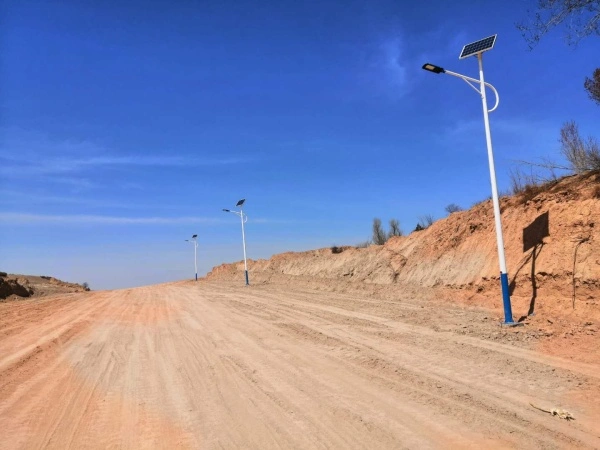
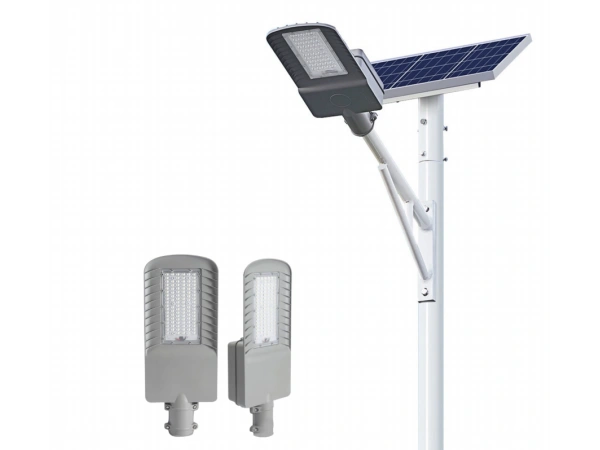
An All in Two Solar Street Light represents a significant evolution in outdoor illumination technology. Unlike traditional monolithic units where the solar panel and light source are permanently fixed together, this innovative design separates the photovoltaic panel from the LED luminaire into two distinct components.
This bifurcation addresses critical challenges faced by procurement managers globally. By detaching the solar panel, installers can orient it towards the sun for maximum energy efficiency while positioning the light head at the optimal angle for road coverage. This flexibility reduces installation complexity and ensures consistent performance even in urban environments with partial shading.
For B2B buyers, this modular approach translates to lower maintenance costs and higher system longevity. The separation allows for easier replacement of individual components rather than discarding entire lighting systems, significantly reducing total cost of ownership (TCO) for municipal and commercial projects.
At Jiangsu Chuanglu Traffic Facilities Co., Ltd., quality is not just a checkpoint—it is a manufacturing philosophy. Based in Yangzhou, China’s "Hometown of Street Lights," our facility integrates advanced R&D with rigorous production standards.
Our All in Two Solar Street Light units undergo comprehensive testing protocols. Each unit is certified with CE, ISO 9001, and SGS marks, ensuring compliance with international safety and quality benchmarks. We prioritize durability through IP66 dust and water resistance ratings, protecting sensitive electronics against harsh weather conditions.
Furthermore, our commitment to health-safe illumination is validated by IEC/TR 62778 Light Biological Safety Compliance. This ensures that our LED technology minimizes ecological impact and protects human vision, a crucial factor for modern smart city initiatives and residential areas.
Selecting the correct solar street lighting solution requires balancing technical specifications with project requirements. Here are the key factors B2B buyers must evaluate:
Evaluate the lumens-per-watt ratio. Higher efficacy means brighter illumination with less energy consumption. For standard roads, 80-120 lumens/watt is typical; for highways, look for >150 lumens/watt.
Lithium Iron Phosphate (LiFePO4) batteries offer superior cycle life and thermal stability compared to traditional lead-acid or gel batteries. Ensure the battery warranty aligns with the LED lifespan (typically 50,000 hours).
Monocrystalline silicon panels generally provide higher conversion efficiency than polycrystalline ones. In the "All in Two" design, ensure the panel size is sufficient to charge the battery fully within available sunlight hours.
Advanced controllers allow for dimming modes, motion sensors, and remote monitoring via IoT integration. These features can reduce energy consumption by up to 40% during low-traffic periods.
For outdoor applications, an IP65 rating is the minimum standard. IP66 or IP68 provides enhanced protection against dust ingress and powerful water jets, essential for regions with heavy rainfall or sandy environments.
Verify if the supplier offers OEM/ODM services. Customizable pole heights, colors, and logos help maintain brand consistency for large-scale infrastructure projects.
Before finalizing your procurement order, use this checklist to mitigate risk and ensure supplier reliability.
Understanding common pitfalls helps buyers avoid costly mistakes and ensure long-term project success.
Many suppliers quote peak wattage but under-specify battery capacity. This leads to lights failing during consecutive cloudy days. Always calculate based on "back-up days" required for your specific latitude.
LED drivers generate heat. If not properly dissipated, this degrades the LEDs and reduces lifespan. Look for aluminum heatsinks and verified thermal testing reports.
Cheap panels degrade faster than specified. Ensure the supplier guarantees ≥90% output after 10 years and ≥80% after 25 years. Monocrystalline panels are preferred for longevity.
In coastal or humid areas, standard aluminum poles may corrode. Specify powder-coated or galvanized steel poles with proper anti-corrosion treatments for salt-air environments.
If the "All in Two" design isn't engineered correctly, wiring between the panel and light head can be prone to failure. Ensure connectors are waterproof and cables are UV-resistant.
Remote troubleshooting is difficult for solar lighting. Choose suppliers who offer video support, spare parts kits, and clear warranty terms to minimize downtime.
When sourcing All in Two Solar Street Lights, partnering with an established manufacturer like Jiangsu Chuanglu Traffic Facilities Co., Ltd. offers distinct advantages for global buyers.
We don't just sell lights; we provide complete smart lighting ecosystems. From LED street lights to traffic signal poles and surveillance solutions, we simplify your supply chain by offering all infrastructure needs from one source.
Our products have been successfully deployed in diverse environments worldwide, including European retrofit projects in Germany and Italy, port lighting in Nigeria, and rural electrification in Pakistan and Senegal. This experience ensures reliability across different climates.
Whether you need specific dimensions, custom logos, or unique packaging, our OEM/ODM capabilities allow us to tailor products to your brand identity. We offer free design and solution planning to meet your exact project requirements.
With 24/7 support and rapid turnaround times, we ensure your procurement process is smooth. Our team is committed to building long-term partnerships through transparency, quality, and service excellence.
The primary advantage is flexibility. By separating the solar panel from the LED light, you can orient the panel directly towards the sun for maximum energy absorption, while positioning the light head optimally for road coverage. This also simplifies maintenance, as individual components can be replaced without discarding the entire unit.
High-quality Lithium Iron Phosphate (LiFePO4) batteries, which we recommend, typically last 3-5 years or 2000+ charge cycles. This aligns well with the 50,000-hour lifespan of modern LED sources. Gel or lead-acid batteries may last shorter periods and require more frequent replacement.
Yes, provided they are correctly sized. We calculate battery capacity based on "autonomy days" (usually 2-3 days) required for your specific geographic location. This ensures continuous operation even during extended periods of poor weather.
Absolutely. We offer full customization services including dimensions, colors, logos, and packaging. Our engineering team provides free design and solution planning to help you create a product that matches your brand identity and project specifications.
Our manufacturing facility is ISO 9001, CE, and SGS certified. Our products feature IP66 dust and water resistance, IK10 impact protection, and comply with IEC/TR 62778 for light biological safety. Specific certifications may vary by market requirements.
About Us
Related Products List
Contact Us

Privacy statement: Your privacy is very important to Us. Our company promises not to disclose your personal information to any external company with out your explicit permission.
Fill in more information so that we can get in touch with you faster
Privacy statement: Your privacy is very important to Us. Our company promises not to disclose your personal information to any external company with out your explicit permission.