


Send Message
Privacy statement: Your privacy is very important to Us. Our company promises not to disclose your personal information to any external company with out your explicit permission.
Select Language



A CCTV camera pole is a specialized structural support system designed to securely mount surveillance equipment at optimal heights for public safety and security monitoring. Unlike standard utility poles, these structures are engineered with specific load-bearing capacities, wind resistance ratings, and mounting configurations to ensure stable operation of heavy camera arrays and accessories in varying environmental conditions.
As a key component of modern smart city infrastructure, CCTV camera poles provide the critical physical foundation for video surveillance networks. They enable precise positioning of cameras to maximize coverage areas while protecting sensitive electronics from weather exposure and physical damage. These systems range from simple single-camera mounts to complex multi-arm structures supporting advanced surveillance arrays with integrated lighting and communication equipment.
Our manufacturing facility operates under strict ISO 9001 quality management standards, ensuring every CCTV camera pole meets international specifications for durability and performance. Each structure undergoes comprehensive testing protocols including wind load simulations, corrosion resistance validation, and structural integrity assessments before shipment.
We utilize premium-grade steel materials with hot-dip galvanization processes that provide superior protection against rust and environmental degradation. The powder coating application creates a durable finish that maintains appearance and structural integrity even in harsh coastal or industrial environments, reducing long-term maintenance costs for global projects.
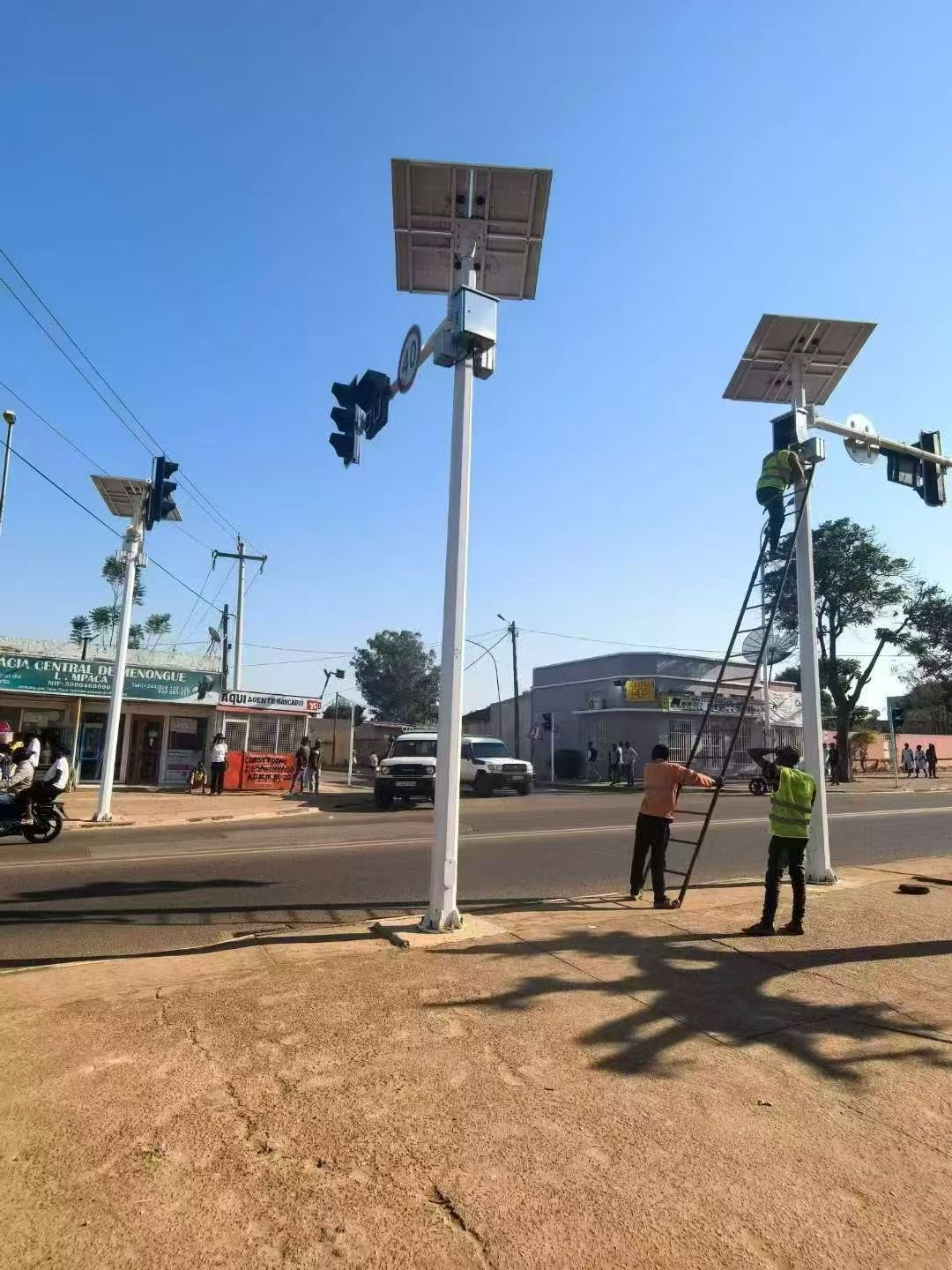
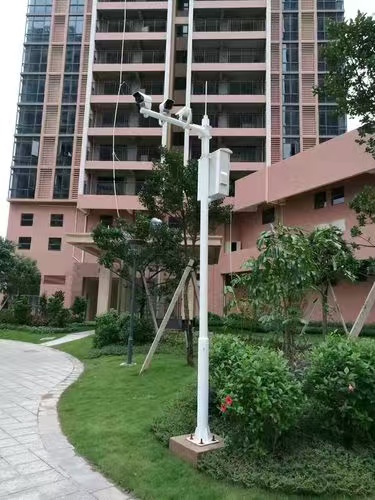
Selecting the appropriate CCTV camera pole requires careful consideration of multiple technical factors that directly impact surveillance effectiveness and installation longevity. The pole height must balance visibility requirements with local regulatory restrictions, typically ranging from 3 to 12 meters depending on application context.
Material selection plays a crucial role in determining service life, with galvanized steel offering the best cost-to-performance ratio for most outdoor installations. Wind load capacity should be calculated based on regional weather patterns, with higher-rated structures providing essential resilience during extreme weather events.
Mounting configuration determines how many cameras and accessories can be supported simultaneously. Single-arm designs suit basic surveillance needs, while multi-arm configurations enable comprehensive coverage of large intersections or facility perimeters without requiring multiple foundation points.
Evaluating potential suppliers requires systematic assessment across multiple dimensions beyond basic pricing. Use this comprehensive checklist to ensure your CCTV camera pole procurement meets all technical, commercial, and logistical requirements.
Experienced procurement professionals recognize that avoiding common pitfalls saves significant time and resources. Understanding typical challenges enables better supplier evaluation and contract negotiation strategies.
Inadequate galvanization thickness or poor powder coating application leads to premature rust formation, particularly in coastal or industrial environments. This often results from cost-cutting measures that compromise material specifications below industry standards.
Insufficient wall thickness or improper welding techniques create weak points that fail under wind loads or seismic activity. Buyers should always request third-party structural verification reports rather than relying on manufacturer declarations alone.
Manufacturing tolerances exceeding acceptable ranges cause mounting difficulties and alignment issues. Pre-installation verification of critical dimensions prevents costly field modifications and project delays.
Missing test certificates, material certifications, or assembly instructions complicate customs clearance and installation processes. Reputable suppliers provide complete documentation packages with every shipment.
Surveillance infrastructure serves diverse sectors with distinct requirements. Understanding application-specific needs helps match the right pole specifications to each project context.
Municipal surveillance networks require standardized pole designs that integrate seamlessly with existing urban infrastructure while supporting multiple camera types and communication equipment for comprehensive city monitoring.
Airports, railway stations, and highway systems demand high-strength poles capable of supporting heavy camera arrays at elevated positions for maximum coverage of critical transportation corridors and passenger areas.
Factory complexes and warehouse operations need robust poles with enhanced corrosion resistance to withstand harsh industrial environments while providing continuous surveillance of production areas and perimeter security zones.
Schools and universities require aesthetically pleasing pole designs that blend with campus architecture while providing reliable surveillance of grounds, parking areas, and building entrances for community safety.
Shopping centers and commercial districts benefit from multi-arm pole configurations that enable comprehensive coverage of parking facilities, entry points, and pedestrian walkways for loss prevention and customer safety.
Gated communities and apartment complexes need discreet pole designs that maintain neighborhood aesthetics while providing effective surveillance of access points, common areas, and perimeter boundaries.
Selecting the right manufacturing partner requires more than comparing unit prices. Evaluate potential suppliers based on their technical capabilities, quality assurance systems, and proven track record in international markets.
Prioritize suppliers with integrated production facilities that control every manufacturing stage from steel processing to final surface treatment. This vertical integration ensures consistent quality throughout the production process and enables rapid response to custom requirements.
Choose manufacturers with demonstrated success supplying similar projects in your region. Their understanding of local regulations, climate conditions, and installation practices significantly reduces project risks and ensures compliance with regional standards.
Comprehensive technical support including design assistance, installation guidance, and after-sales service provides valuable protection against unforeseen challenges. Suppliers offering free engineering consultation demonstrate confidence in their product specifications.
Standard CCTV camera poles range from 3 to 12 meters in height, with custom heights available up to 20 meters for specialized applications. The optimal height depends on surveillance requirements, local regulations, and wind load considerations. Higher poles provide wider coverage angles but may require reinforced foundations and stricter adherence to aviation obstruction standards.
Hot-dip galvanization creates a metallurgical bond between the steel substrate and zinc coating, providing superior corrosion protection compared to electroplating. This process typically produces coatings measuring 85-120 microns thick, ensuring minimum 25-year service life in normal environments and 15+ years in aggressive coastal or industrial settings.
Yes, multi-arm configurations enable single poles to support 2-4 cameras along with additional accessories like LED lighting, speakers, and wireless communication equipment. The structural design distributes loads evenly across mounting brackets while maintaining aesthetic appeal through streamlined arm geometries.
Foundation specifications vary based on pole height, wind load ratings, and soil conditions. Typical requirements include concrete bases measuring 1.2-2.4 meters square and 1-3 meters deep, incorporating anchor bolt assemblies positioned to precise tolerances. Professional geotechnical surveys ensure adequate bearing capacity for tall installations.
Standard configurations typically ship within 15-20 working days, while custom designs requiring engineering approval and specialized tooling may need 25-35 working days. Expedited production schedules are available for urgent projects, though they may incur additional charges. Shipping times depend on destination and chosen logistics methods.
About Us
Related Products List
Contact Us

Privacy statement: Your privacy is very important to Us. Our company promises not to disclose your personal information to any external company with out your explicit permission.
Fill in more information so that we can get in touch with you faster
Privacy statement: Your privacy is very important to Us. Our company promises not to disclose your personal information to any external company with out your explicit permission.