


Send Message
Privacy statement: Your privacy is very important to Us. Our company promises not to disclose your personal information to any external company with out your explicit permission.
Select Language



High mast lighting represents the gold standard in illuminating vast open areas where uniform light distribution is critical for safety and security. Typically featuring poles ranging from 20 to 50 meters in height, these systems utilize a cluster of high-intensity lamps positioned at the apex to cast light over an area spanning up to 3 hectares.
For procurement professionals, selecting the right high mast lighting solutions involves balancing initial capital expenditure with long-term operational efficiency. Modern LED-based high mast lights offer superior lumen output while significantly reducing energy consumption compared to traditional metal halide systems.
Jiangsu Chuanglu Traffic Facilities Co., Ltd., based in Yangzhou—China's premier hub for traffic infrastructure manufacturing—specializes in engineered high mast lighting systems designed for durability and performance. Whether you are sourcing for highway interchanges, port facilities, or large-scale industrial complexes, our integrated approach ensures that every component, from the galvanized steel structure to the photometric design, meets international standards.
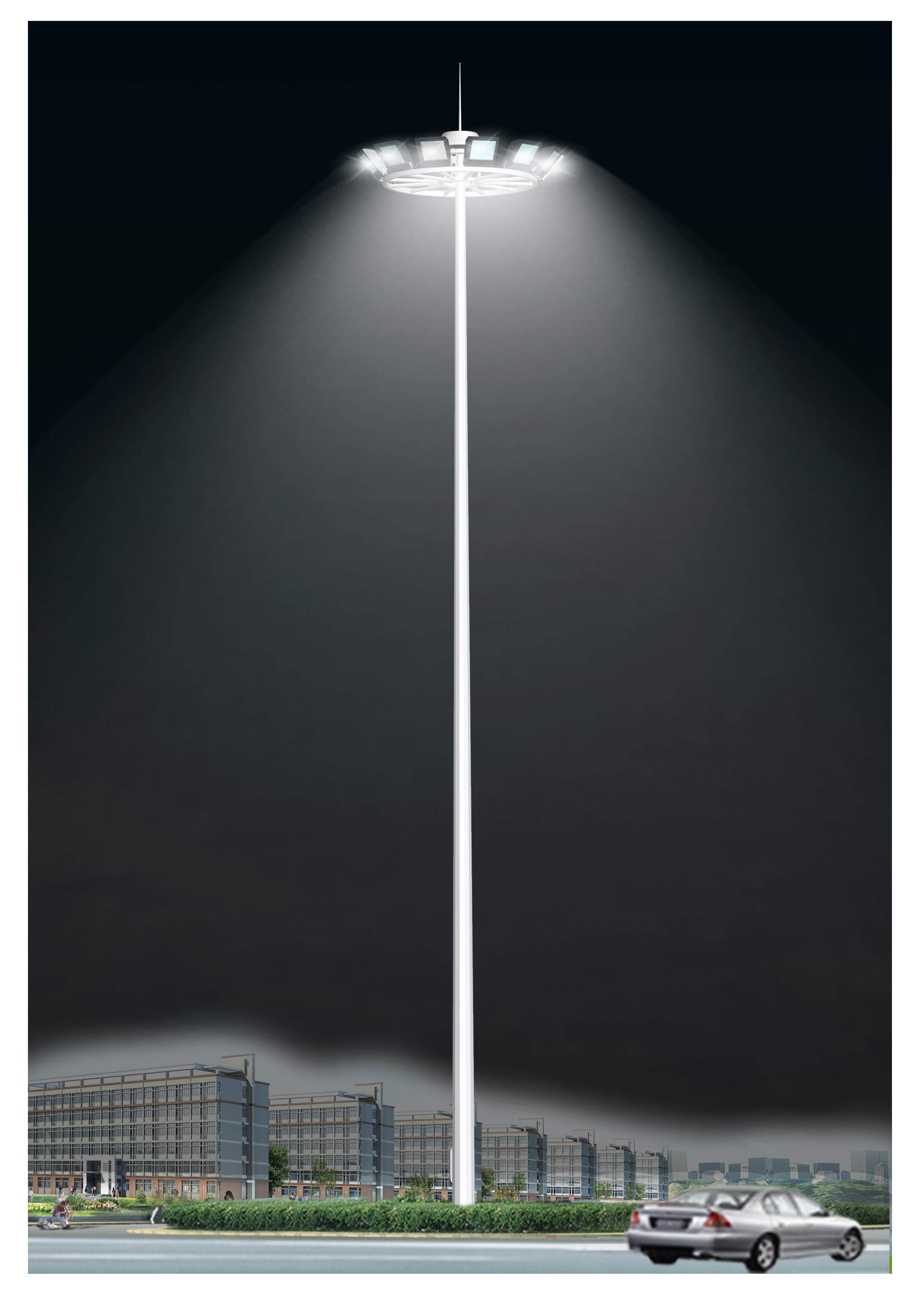
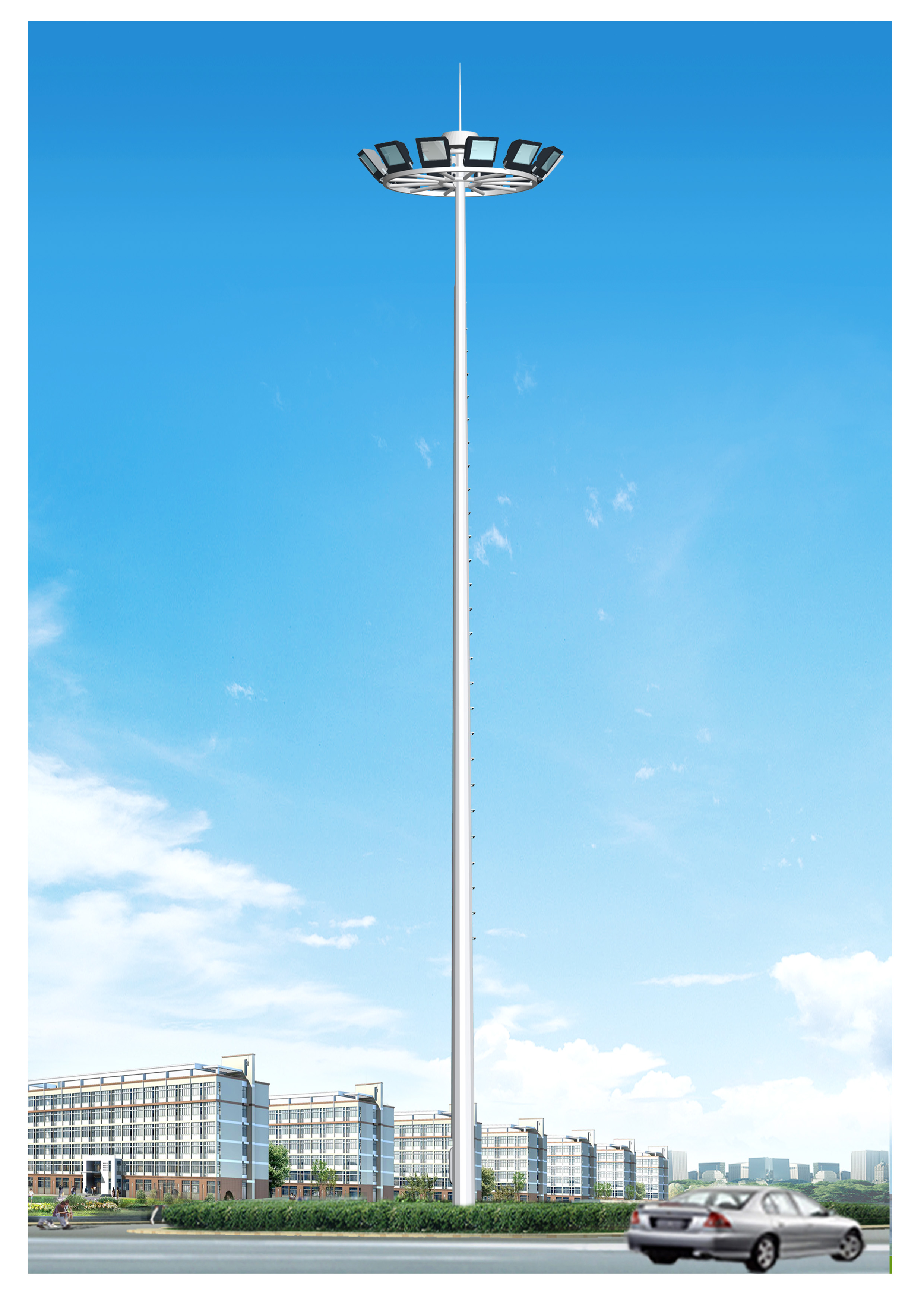
Our manufacturing facility operates under strict ISO 9001 quality management protocols, ensuring that every high mast light pole undergoes rigorous testing before shipment. We utilize hot-dip galvanization for structural integrity, providing corrosion resistance that exceeds 25 years even in harsh coastal or industrial environments.
Every unit is backed by CE, SGS, and ISO certifications, giving your project compliance assurance and reducing procurement risk. Our IP66-rated luminaires guarantee dust and water resistance, maintaining performance integrity regardless of weather conditions.
We prioritize human health with IEC/TR 62778 compliant lighting, eliminating blue-light hazard risks. This biological safety feature is particularly valuable for urban applications and residential proximity zones.
With IK10 impact protection ratings, our fixtures withstand severe environmental stressors, minimizing maintenance costs and downtime for your infrastructure investment.
Choosing the optimal high mast lighting configuration requires careful consideration of technical specifications, environmental factors, and total cost of ownership. Use this guide to evaluate potential suppliers and ensure your procurement decisions align with project requirements.
Standard heights range from 25m to 40m, but custom configurations up to 50m are available for specialized applications. Consider the span coverage required—taller masts provide wider illumination spread but require more robust foundation engineering. Evaluate deployment options including fixed, folding, or telescopic designs based on site accessibility and maintenance needs.
LED technology has become the industry standard for new installations due to its superior efficacy and longevity. When evaluating options, compare lumens per watt ratings, color temperature options (3000K-6500K), and dimming capabilities. Ensure the supplier offers customizable beam angles to match your specific photometric requirements.
The longevity of your high mast system depends heavily on material quality and protective coatings. Look for Q345 steel construction with minimum 85-micron hot-dip galvanization. Verify wind load calculations meet local codes and assess the anti-corrosion treatment applied to all structural components.
Request detailed LM-79 and LM-80 test reports from your supplier. These documents verify actual lumen output and predict lifespan degradation rates. Uniformity ratios should typically exceed 0.7 for safe pedestrian and vehicular movement in large illuminated areas.
Modern high mast installations benefit from smart control capabilities. Evaluate options for photocell integration, motion sensors, and centralized management systems. These features enable significant energy savings through adaptive lighting strategies while maintaining security levels.
Verify the manufacturer's capacity to handle your order volume and timeline. Check their experience with similar projects, export documentation capabilities, and after-sales support infrastructure. A reliable partner provides comprehensive technical documentation and responsive customer service.
Use this comprehensive checklist to streamline your evaluation process and ensure no critical requirement is overlooked when sourcing high mast lighting systems from international manufacturers.
Experienced buyers understand that proactive problem-solving prevents costly delays and quality issues. Below are frequent challenges encountered in global high mast lighting procurement and proven mitigation strategies.
The Problem: Lumen depreciation occurs faster than specified, leading to inadequate illumination within 3-5 years of operation.
The Solution: Require LM-80 test data from LED manufacturers and demand T80/L70 lifecycle predictions. Specify drivers with thermal management systems that maintain junction temperatures below manufacturer limits.
The Problem: Standard galvanization fails prematurely in salt-air environments, causing structural degradation and safety hazards.
The Solution: Specify additional powder coating over hot-dip galvanization (double protection system). Request corrosion rate certificates and verify coating thickness meets ASTM B117 salt spray test requirements for 1000+ hours.
The Problem: Long, slender poles are vulnerable to bending during transit, especially when crossing multiple ports.
The Solution: Work with suppliers who use specialized crating with internal bracing. Confirm folding or telescopic designs are available for regions with difficult transport routes. Insist on third-party inspection before shipment.
The Problem: Missing or invalid certification documents cause customs delays and project postponements.
The Solution: Request complete documentation packages upfront including test reports, material certificates, and conformity declarations. Verify all certifications are current and recognized in your target market.
Selecting the right manufacturing partner extends beyond product specifications—it encompasses reliability, customization capability, and proven international experience. Here's what to look for in a world-class high mast lighting supplier.
Prioritize suppliers who control the entire production chain—from steel fabrication to LED assembly and final testing. Vertical integration ensures consistent quality, shorter lead times, and greater accountability throughout the manufacturing process.
Look for suppliers with documented success across diverse climates and regulatory environments. Proven projects in Europe, Africa, Asia, and the Americas demonstrate adaptability to varying standards and logistical challenges.
Your project likely requires specific modifications. Confirm the supplier offers full OEM/ODM services including custom dimensions, colors, logos, and packaging. Flexible design support accelerates project timelines.
World-class suppliers provide 24/7 technical assistance, photometric simulation services, and detailed installation guidance. Responsive support minimizes project delays and resolves issues before they impact your bottom line.
Verify comprehensive certification coverage including ISO 9001, CE marking, SGS testing, and product-specific standards. Multiple certifications signal commitment to quality and facilitate smoother customs clearance.
Forward-thinking suppliers invest in R&D for energy-efficient solutions and smart lighting integration. Partners committed to sustainability help you meet green building standards and reduce long-term operational costs.
Access expert insights on common questions regarding high mast lighting specifications, installation requirements, and procurement best practices from experienced infrastructure suppliers.
High-quality LED high mast lights typically achieve 50,000 to 100,000 hours of operational life, translating to 10-20 years of service depending on usage patterns. The longevity depends primarily on LED chip quality, thermal management design, and driver reliability. Jiangsu Chuanglu utilizes premium LED modules with verified LM-80 data, ensuring minimal lumen depreciation over the product lifecycle.
Pole height selection follows established lighting design principles based on the area's dimensions, desired illuminance levels, and mounting configuration. Generally, pole height should be 1.5 to 2 times the distance between adjacent poles. Professional photometric simulations using software like DIALux or AGI32 help optimize spacing and height for uniform light distribution while minimizing energy consumption.
Essential certifications include ISO 9001 for quality management, CE marking for European markets, and SGS testing reports for independent verification. Depending on the destination country, additional certifications such as UL (North America), SABS (South Africa), or SIRIM (Malaysia) may be required. Jiangsu Chuanglu maintains comprehensive certification portfolios covering major international markets.
Yes, full customization is available including pole color matching, logo integration, and specialized packaging. Manufacturers offering OEM/ODM services can accommodate brand-specific requirements while maintaining structural integrity and performance standards. Custom powder coating finishes allow precise color matching to municipal or corporate branding guidelines.
Standard lead times typically range from 30 to 45 days for orders up to 100 units, depending on specification complexity and production scheduling. Custom designs or specialized configurations may require additional time for engineering validation. Jiangsu Chuanglu maintains efficient production workflows capable of handling large infrastructure project timelines while preserving quality standards.
Foundation design is critical for structural stability, particularly given the significant wind loads acting on tall mast structures. Engineering calculations must account for soil bearing capacity, seismic activity, and maximum wind speeds specific to the installation location. Reputable suppliers provide detailed foundation drawings and reinforcement specifications tailored to each project's geotechnical conditions.
Maintenance planning should include access equipment requirements, spare parts inventory, and expected replacement cycles. Folding or telescopic mast designs simplify maintenance by bringing luminaires to ground level. Procurement should factor in 5-10% spare parts recommendations including LED modules, drivers, and fuses to minimize downtime during repairs.
About Us
Related Products List
Contact Us

Privacy statement: Your privacy is very important to Us. Our company promises not to disclose your personal information to any external company with out your explicit permission.
Fill in more information so that we can get in touch with you faster
Privacy statement: Your privacy is very important to Us. Our company promises not to disclose your personal information to any external company with out your explicit permission.