


Send Message
Privacy statement: Your privacy is very important to Us. Our company promises not to disclose your personal information to any external company with out your explicit permission.
Select Language



A solar garden light is an autonomous outdoor lighting fixture that captures energy from the sun during the day and converts it into illumination at night. Unlike traditional wired lights, these fixtures eliminate the need for trenching, electrical wiring, and ongoing electricity costs, making them an ideal solution for landscaping, pathways, and decorative accents.
For procurement professionals, the primary value of solar garden lighting lies in its total cost of ownership reduction. By removing dependency on the grid, you significantly lower installation labor costs and protect your clients from rising energy prices. Modern units feature intelligent sensors that optimize battery life and automatically adjust brightness based on ambient conditions.
PV Panel: High-efficiency monocrystalline silicon cells capture sunlight.
Battery: Lithium-ion or LiFePO4 cells store energy for reliable night-time operation.
Controller: Manages charging cycles, over-discharge protection, and light sensors.
Zero Wiring Costs: No trenching or electrician fees required.
Safety: Low-voltage operation eliminates shock hazards in wet environments.
Flexibility: Easily relocated as landscape designs evolve.
At Jiangsu Chuanglu Traffic Facilities Co., Ltd., quality is not just a checkpoint—it is the foundation of our manufacturing process. Based in Yangzhou, China’s “Hometown of Street Lights,” we leverage decades of industrial expertise to produce solar garden lights that meet rigorous international standards.
Our facility operates under ISO 9001 quality management systems, ensuring consistent batch quality. Every unit undergoes strict testing protocols before shipment.
We guarantee IP66 rating for dust and water resistance, essential for outdoor exposure. Our products also comply with IEC/TR 62778 for light biological safety, protecting local ecosystems.
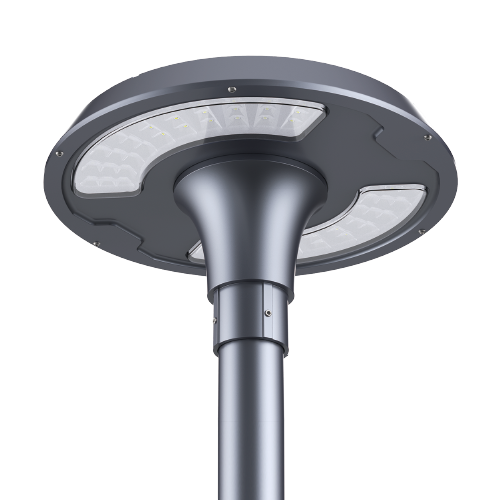
Selecting the optimal solar garden light requires balancing technical specifications with environmental constraints. Buyers must evaluate factors beyond aesthetics to ensure long-term performance and ROI.
Prioritize LiFePO4 batteries over older lead-acid or basic lithium-ion types. They offer longer cycle life (2000+ charges) and better thermal stability, reducing replacement frequency and maintenance costs.
Look for monocrystalline panels with efficiency ratings above 21%. Higher efficiency means faster charging times and better performance during cloudy days or shorter winter daylight hours.
Match brightness to application: 100-300 lumens for pathway accent, 500+ lumens for security zones. Choose 3000K-4000K (warm to neutral white) for residential harmony.
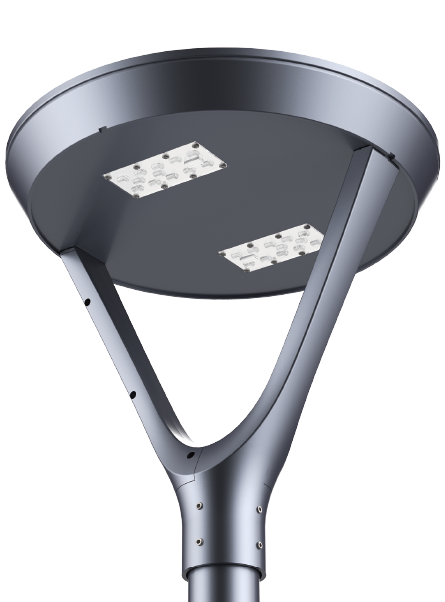
Use this comprehensive checklist to evaluate potential suppliers and ensure your solar garden light procurement meets all technical, logistical, and commercial requirements.
Verify IP66 waterproofing, IK10 impact resistance, and CE/RoHS certification documents are provided.
Confirm minimum 3-year warranty on battery capacity retention (above 80% after 1000 cycles).
Ensure OEM/ODM support for logo printing, color matching, and packaging design.
Check production capacity matches your volume needs. Confirm standard vs. rush order timelines.
Verify 24/7 response capability and spare parts availability for long-term project support.
Request case studies from similar climates or project scales to validate real-world performance.
Procuring solar garden lights globally comes with specific challenges. Understanding these common pitfalls helps buyers avoid costly mistakes and ensures smoother project execution.
Winter performance drops due to reduced sunlight hours and lower panel efficiency. Solution: Specify lights with oversized panels relative to battery capacity and choose LiFePO4 batteries that perform better in cold temperatures than standard lithium-ion.
Cheap controllers often overcharge or deep-discharge batteries. Solution: Require integrated MPPT (Maximum Power Point Tracking) controllers and demand verified cycle-life data from the manufacturer.
Inconsistent LED binning and poor heat dissipation cause color temperature shifts and brightness variance. Solution: Request LED binning reports and verify aluminum heatsink construction in the product specifications.
Solar lights contain fragile glass/plastic panels and heavy batteries. Solution: Specify reinforced carton packaging with foam inserts and request pre-shipment drop-test documentation from your supplier.
When selecting a solar garden light supplier, prioritize manufacturers with proven global experience, certified facilities, and comprehensive customization capabilities. Here are key criteria for evaluating potential partners.
Choose suppliers with dedicated production lines and verified capacity. Large-scale manufacturers like Jiangsu Chuanglu can handle bulk orders with consistent quality control across thousands of units.
Look for suppliers with documented international projects. Proven track records in diverse climates (Europe, Africa, Asia) demonstrate adaptability and reliability.
Flexible suppliers offer full customization including branding, packaging, and technical modifications. This reduces your time-to-market and strengthens your brand identity.
Essential certifications include CE, RoHS, ISO 9001, and IP66 ratings. These ensure compliance with import regulations and reduce customs clearance risks.
Fast communication is critical. Ideal suppliers provide 24/7 support, rapid quotation turnaround, and proactive project management updates.
Competitive suppliers offer 3-5 year warranties covering both LEDs and batteries. Clear warranty terms protect your investment and reduce after-sales liability.
Get answers to the most common questions from procurement professionals sourcing solar garden lights for international projects.
High-quality solar garden lights typically last 5-8 years. The LED module itself can exceed 50,000 hours, while the battery usually requires replacement after 3-5 years depending on usage cycles. Choosing LiFePO4 batteries extends overall system life significantly.
Yes, but performance varies. Modern monocrystalline panels can charge even on overcast days, though charging efficiency decreases by 30-50%. For cloudy regions, specify larger panels and batteries to compensate for reduced solar input.
MOQ varies by supplier and customization level. Standard products may have lower MOQs (100-500 units), while fully customized solutions with unique molds or packaging typically require 1,000+ units. Contact suppliers directly for project-specific pricing tiers.
Total landed cost includes product price, freight, insurance, customs duties, and local delivery. While solar lights have higher upfront costs than wired alternatives, eliminating wiring infrastructure and electricity savings typically result in 40-60% lower total cost of ownership over 5 years.
Standard stake-mounted lights may struggle in extreme winds. For coastal or high-wind zones, specify ground-spiked bases with anchor stakes or bolt-down mounting options. Verify IK10 impact rating for storm resilience.
About Us
Related Products List
Contact Us

Privacy statement: Your privacy is very important to Us. Our company promises not to disclose your personal information to any external company with out your explicit permission.
Fill in more information so that we can get in touch with you faster
Privacy statement: Your privacy is very important to Us. Our company promises not to disclose your personal information to any external company with out your explicit permission.