


Send Message
Privacy statement: Your privacy is very important to Us. Our company promises not to disclose your personal information to any external company with out your explicit permission.
Select Language



Solar street light LED technology represents a significant leap forward in sustainable urban infrastructure. By integrating high-efficiency photovoltaic panels with advanced LED luminaire systems, these self-contained units harness renewable energy to provide reliable, cost-effective illumination for public roads and pathways.
During daylight hours, the solar panel converts sunlight into electricity, which is stored in a rechargeable battery system. As dusk falls, an integrated sensor automatically activates the LED light source, providing consistent, shadow-free illumination throughout the night without drawing power from the electrical grid.
At Jiangsu Chuanglu Traffic Facilities Co., Ltd., quality assurance is embedded in every stage of production. Our facility adheres to strict international standards, ensuring that every solar street light LED unit delivered meets rigorous performance benchmarks.
Our manufacturing process is backed by ISO 9001, CE, and SGS certifications. These credentials guarantee that our products comply with global safety and environmental regulations, simplifying your import and compliance workflow.
With IP66 dust and water resistance ratings and IK10 impact protection, our lights are engineered to withstand harsh weather conditions, including heavy rain, snow, and accidental physical impacts.
Compliance with IEC/TR 62778 ensures light biological safety, minimizing blue light hazard risks and protecting both human health and local ecosystems.
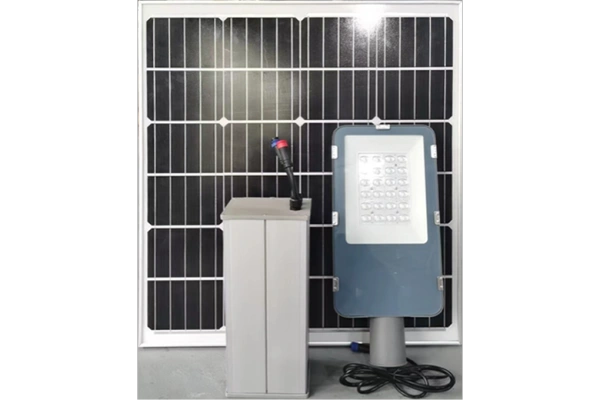
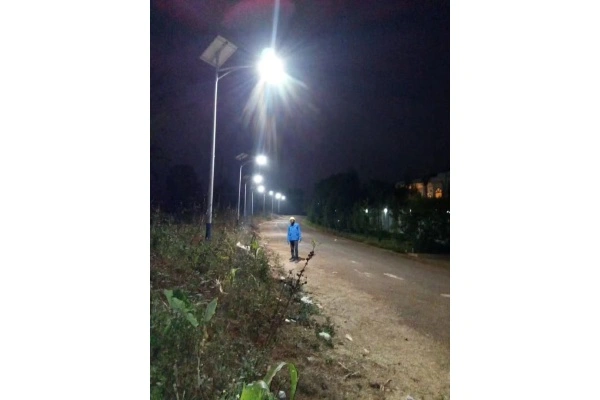
Selecting the optimal solar street light LED system requires careful consideration of several technical factors. A mismatch in specifications can lead to inadequate illumination or premature battery failure.
Evaluate lumens per watt (lm/W) efficiency. Higher efficiency LEDs reduce the size and cost of the solar panel and battery required, lowering your total landed cost while maintaining road safety standards.
Ensure the system provides at least 2-3 days of backup autonomy (consecutive nights without sun). Lithium-ion batteries often offer better cycle life and charge/discharge efficiency compared to older Lead-Acid options.
For coastal or industrial areas, specify marine-grade aluminum alloys or galvanized steel with powder coating to prevent corrosion, extending the service life of your investment.
Use this checklist to evaluate potential suppliers and ensure you secure the best value for your procurement project.
Confirm valid CE, RoHS, and ISO 9001 documentation before placing orders.
Verify if the supplier offers custom branding, packaging, and design modifications to fit your market needs.
Assess factory output capabilities to ensure they can meet your project timeline without delays.
Look for suppliers offering comprehensive warranty terms and accessible technical support channels.
Always request pre-production samples to validate performance in your local climate conditions.
Consider maintenance costs and lifespan, not just the initial purchase price.
The versatility of solar street light LED technology allows it to be deployed across a wide range of environments, from dense urban centers to remote rural areas.
Ideal for main highways and secondary roads where grid extension is costly or impractical. Provides consistent, glare-free illumination for traffic safety.
Enhances aesthetic appeal while supporting sustainability goals. Perfect for pedestrian paths, bicycle lanes, and recreational areas within universities and corporate campuses.
Rugged designs suitable for large-scale industrial complexes, logistics hubs, and ports (like the Lekki Deep Sea Port project), ensuring security and operational visibility.
Integrates seamlessly with IoT sensors for smart city initiatives, enabling data collection on traffic, weather, and air quality alongside lighting functions.
Understanding common pitfalls helps buyers avoid costly mistakes and ensure long-term project success.
Many budget units use low-quality batteries that degrade quickly. Solution: Specify LiFePO4 batteries with verified cycle life data and warranty terms.
Some manufacturers inflate lumen output claims. Solution: Request third-party test reports from accredited labs to verify actual light output and efficiency.
Excessive heat reduces LED lifespan. Solution: Ensure the fixture has adequate heatsinking and thermal interface materials to dissipate heat effectively.
Difficulty sourcing replacement parts can strand entire projects. Solution: Partner with established manufacturers like Jiangsu Chuanglu who offer comprehensive spare parts packages.
When selecting a partner for solar street light LED supply, look for proven track records and comprehensive service capabilities.
Jiangsu Chuanglu Traffic Facilities Co., Ltd. operates as a leading integrated supplier based in Yangzhou, China's "Hometown of Street Lights." This centralization ensures tight quality control over the entire production chain, from raw materials to finished goods.
With successful implementations in Germany, Italy, Nigeria, Canada, and Southeast Asia, Chuanglu demonstrates the ability to adapt to diverse regulatory environments and climatic conditions worldwide.
Offering full OEM/ODM services, free design planning, and rapid turnaround times, Chuanglu supports distributors and contractors in tailoring solutions to specific client requirements and brand identities.
High-quality lithium-ion batteries used in modern solar street lights typically last between 5 to 8 years, depending on charge cycles and temperature conditions. We recommend specifying LiFePO4 chemistry for extended longevity and safer operation.
Yes, properly designed systems include battery autonomy to handle consecutive cloudy days. Standard configurations usually provide 2-3 days of backup. In regions with prolonged winter darkness, larger battery capacities may be recommended.
Maintenance is minimal compared to traditional lighting. Occasional cleaning of the solar panel surface to remove dust or debris is recommended. The LED modules themselves have lifespans exceeding 50,000 hours, rarely requiring replacement.
Absolutely. Jiangsu Chuanglu provides full OEM/ODM services, including custom dimensions, colors, logos, and packaging design. We also offer free solution planning to help tailor products to your specific market needs.
Key certifications include CE (Europe), RoHS (environmental safety), ISO 9001 (quality management), and SGS testing reports. For North American markets, consider UL or ETL listings. Our facility maintains all major international certifications.
About Us
Related Products List
Contact Us

Privacy statement: Your privacy is very important to Us. Our company promises not to disclose your personal information to any external company with out your explicit permission.
Fill in more information so that we can get in touch with you faster
Privacy statement: Your privacy is very important to Us. Our company promises not to disclose your personal information to any external company with out your explicit permission.